Table Of Content

A few years ago, when flexible layouts were almost a “luxury” for websites, the only things that were flexible in a design were the layout columns (structural elements) and the text. Images could easily break layouts, and even flexible structural elements broke a layout’s form when pushed enough. Flexible designs weren’t really that flexible; they could give or take a few hundred pixels, but they often couldn’t adjust from a large computer screen to a netbook. They’re achieved by the use of responsive containers that automatically resize based on screen dimensions, scaling the image as well. When the max-width of an image is set to 100%, the percentage decreases as the website layout shrinks, thus scaling down the image. This also prevents the image from growing too large on extra broad displays and becoming pixelated as a result.
All open-source articles on Responsive Design (RD)
On a smaller screen, the portfolio piece is cut down to one, and then eventually left out altogether for very small screens and narrow browsers. The visualizations below collapse into fewer columns and more rows, and again, some drop off entirely for very small screens. This design shows a creative and intelligent way to make a not-so-common layout work responsively. The first screenshot below is the view from a standard computer screen dimension. The sidebar disappears, navigation goes to the top, and text is enlarged for easy and simple vertical reading. One can create multiple style sheets, as well as basic layout alterations defined to fit ranges of widths — even for landscape vs. portrait orientations.
Search Results
Still, responsive design aids great UX since, by default, it requires uniformity, seamlessness, and simplicity in your design efforts. It is SEO-friendly, and the multiple CMS and frameworks, such as WordPress and Bootstrap, make it very cheap to implement. Whether or not WordPress sites are responsive depends on the theme of your WP site. A WordPress theme is the equivalent of a template for a static website and controls the design and layout of your content.
65+ Web Design Statistics to Keep Trending in 2024 - G2
65+ Web Design Statistics to Keep Trending in 2024.
Posted: Tue, 23 Jan 2024 08:00:00 GMT [source]
Designing For The Best Experience For All Users
All pages have been meticulously adjusted for different screens and devices, ensuring that visitors can enjoy your information without any compromise in layout or functionality. Just click the button “Preview in browser” at the top and try to play with that on your screen. A responsive web page should look good on large desktop screens and on small mobile phones.
All Our Services
The above examples show the importance of responsive design in day-to-day businesses. Now, let’s see the core principles of responsive web design to understand how it is a cornerstone to helping businesses succeed in today’s mobile world. The goal of responsive design is to provide an optimal viewing experience—easy reading and navigation with minimal resizing, panning, and scrolling—regardless of the device used to access the site.
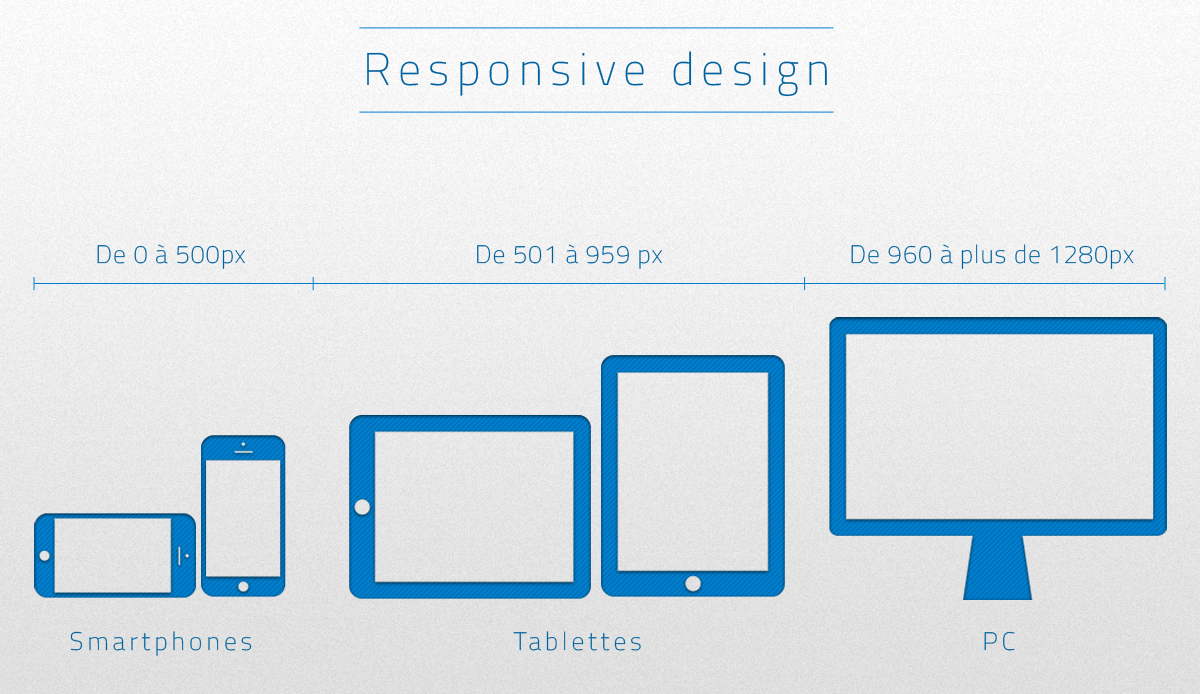
While the default responsive behavior may sound like no solution is needed, long lines of text displayed full screen on a wide monitor can be difficult to read. They allow us to apply CSS rules based on the device's characteristics, such as its width, height, orientation, or resolution. These queries can be added either in the same style sheet, or in separate style sheets using the @import rule. Responsive design is an approach to web design that makes your web pages look good on all devices (desktops, tablets, and phones).

In this article, we’ll take you through a 101-style introduction to responsive web design, discuss why it’s a non-negotiable necessity in modern web design, and help you implement it. Allows for content and ad personalization across Google services based on user behavior. Permits storing data to personalize content and ads across Google services based on user behavior, enhancing overall user experience. In this image, you can see that the fixed version of the content has the same width regardless of the device, whereas in the fluid version, the content fills the available screen space of the device.
If using breakpoints, best practices encourage defining media query breakpoints with relative units rather than absolute sizes of an individual device. For example, the following media query tests to see if the current web page is being displayed as screen media (therefore not a printed document) and the viewport is at least 80rem wide. The CSS for the .container selector will only be applied if these two things are true. It is a term used to describe a set of best practices used to create a layout that can respond to any device being used to view the content. Creating a non-resizable web page by setting a fixed width doesn't work either; that leads to scroll bars on narrow devices and too much empty space on wide screens. Additionally, the template provides opportunities for effectively presenting a company's work or services.
Column 1
Users appreciate sites that adapt to their needs, so companies can not only access a wider audience but an audience more likely to return. Enables personalizing ads based on user data and interactions, allowing for more relevant advertising experiences across Google services. These file formats are lightweight, and you can scale them to any resolution without quality loss.
The world is shifting to a mobile-first world and any website that doesn't adapt to this shift risks being left behind. Most businesses now have a robust online presence, but many fail to meet today's customer expectations by not optimizing their websites for mobile devices. To create an effective, responsive design, you need tools to quickly and easily update your website without redeveloping it completely. Moreover, responsive web design can lead to better search engine optimization (SEO) for your website. Search engines, including Google, prioritize websites that provide a smooth and efficient user experience. By meeting these criteria, a website becomes more appealing to users and stands a better chance of ranking higher in search results.
Let’s discuss some basics of responsive design you should know when developing your websites or web applications. Responsive Design allows people to access content across multiple device resolutions. As more people interact with websites through mobile devices, users now expect websites to be responsive. Here we’ll look at the main principles of responsive design and how it supports accessibility and device-switching. Responsive design is robust and economical, but its "easy" nature is deceptive.
In contrast to this, if the website design were static, it would maintain the structure of the web page where all columns of the header would remain next to each other horizontally. Here we explore different types of Selenium locators and learn how they are used with different automation testing. If you’d like to stay-in-the-know about responsive website design, sign up for our exclusive newsletter, Revenue Weekly, to get web design and marketing tips for your business.
Adaptive design involves creating a unique web layout for each device, so a website appears on a device’s screen in the layout dedicated to that particular device. A responsive web design is all about meeting and then surpassing the expectations of potential customers. People encounter inconsistent mobile experiences, slow pages, confusing page setups and other problems too often. If companies remove these pain points, they can win over users and convert them into loyal customers. In responsive design, you can define rules for how the content flows and how the layout changes based on the size range of the screen. The difference between responsive design and adaptive design is that responsive design adapts the rendering of a single page version.
Typography is one of the cornerstones of web design and, as such, can make the website impractical when ignored. Adjusting typography to several screen layouts is essential to end up with text that’s legible and organized. Aside from device types, there are also varying web browsers to account for when building a truly responsive website.


No comments:
Post a Comment