Table Of Content
So even despite the drawbacks, responsive design is what the overwhelming majority of Internet users prefer, because it makes the mobile browsing process that much easier. The first step in making a site responsive is to create a flexible layout. This is done using relative units like percentages, instead of absolute units like pixels, for widths.
HTML Media
Mobile users have been rising due to how smartphones have become mainstream in the past five years. According to Statista, Internet users spent 58.33% of their time browsing the web on their mobile phones globally during the first quarter of 2023. The W3C specification of HTML+ stated that websites have to be rendered according to the user preferences.[31] The customization of web page layout was lacking however.
Automation Testing Cloud
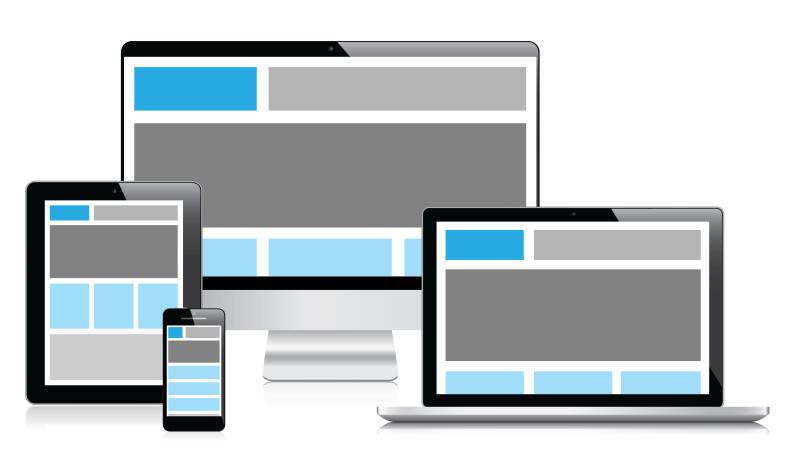
While resizing an image for mobile devices can be very simple, if the original image size is meant for large devices, it could significantly slow download times and take up space unnecessarily. Following the same principle of adopting percentage values instead of fixed pixels, fluid grids adjust web content in proportion to the browser window. It’s because of fluid grids that horizontally lined up columns can be stacked vertically when the user switches from a wider to a narrower screen.
HTML and CSS
Take visitor expectations into account to create a site they’ll want to interact with. When creating the blueprint for your website, design around the content of your site, not around the most popular gadget in the market. Technology changes quickly, and the coolest, newest device will surely go out of style at some point.
Open Access—Link to us!
Due to its nature, it's time-sensitive, and people expect updates on their favorite websites anytime. People will leave a website immediately and look for something else if a website isn't responsive. Responsive web design relieves web designers, user interface designers, and web developers from working day and night creating websites for every single different device in existence.
Related Responsive Web Design Careers
Because zooming and scrolling will be eliminated, content can be viewed quicker, and the overall impression that visitors have will be much more positive. Responsive design can help you solve a lot of problems for your website. It will make your site mobile-friendly, improve the way it looks on devices with both large and small screens, and increase the amount of time that visitors spend on your site.
The Meaning and Purpose of Responsive Web Design — SitePoint - SitePoint
The Meaning and Purpose of Responsive Web Design — SitePoint.
Posted: Tue, 02 May 2017 07:00:00 GMT [source]
What Tools Can I Use for Responsive Web Design?
They’re used to set the control and layout of a web page in different browsers. By not employing responsive designs, you’ll be unable to maximize your conversions and ROI. You won’t reach most of your potential audience and lose money on ad spend. If you’re alive in 2023, you know that people use thousands of different devices to access the net worldwide. Your website will have to look great on many physical endpoints, be it iPhones or Android, tablets or smartwatches.
If you’re looking for some professional assistance when it comes to making your website responsive, WebFX can help. We offer responsive web design and development services, with over 1,600 sites launched. With a responsive web design, companies ensure their sites remain easy to use on laptops, phones and other devices. To learn more about why responsive web design is important for accessibility, read the WCAG’s success criterion guideline.Learn more about the mobile-first approach proposed by Luke Wroblewski.

If you use another WordPress theme, you can test if it’s responsive or not by comparing how it looks on different devices or using Chrome Developer Tools. The problem with doing the above is that the user loses the ability to zoom any text set using the vw unit, as that text is always related to the size of the viewport. The rest of this article will point you to the various web platform features you might want to use when creating a responsive site. By default, the responsive pages display the often used attributes and hide the less often used attributes.
9 responsive design mistakes you don't want to make - TNW
9 responsive design mistakes you don't want to make.
Posted: Wed, 28 Oct 2015 07:00:00 GMT [source]
It’s helpful to know which browser your target audience likes to use, and if there’s a split between browser preferences, you’ll need to make sure your website is compatible with all used browsers. Here are a few best practices to help you avoid mistakes in responsive design and overcome its challenges. You can effortlessly incorporate these standard CSS breakpoints into your web project, ensuring responsiveness across various devices.
Developers achieve this by using CSS and HTML to take into account a device’s resolution, screen size, resolution, color scheme and other factors. Implementing CSS, responsive images and a fluid grid all contribute to a site’s ability to adjust to screens of all sizes. For designers who want to leverage the most recent advancements, they can also produce mobile app versions of their sites with progressive web applications.
Users on mobile devices also make up the majority of search engine visits. For example, your content might be separated into different columns on desktop screens, because they are wide enough to accommodate that design. As you research responsive web design, you're likely to come across the term adaptive web design as well. This means that we only need to specify the font size for the heading once, rather than set it up for mobile and redefine it in the media queries. The font then gradually increases as you increase the size of the viewport. With multicol, you specify a column-count to indicate the maximum number of columns you want your content to be split into.
With responsive web design, we can create custom solutions for a large chunk of users on a wider variety of devices. A website can work well for someone using a legacy device just as much as it does for most people with the latest devices. This inclusivity also covers the few users with the advanced smartphones now and in the future.
RWD makes it possible to build one adaptive website rather than needing to create a mobile version alongside the one that's optimized for desktop browsers. In this example, we want to set our level 1 heading to be 4rem, meaning it will be four times our base font size. Using along with max-width removes the need for sizing images with media queries. It enables targeting images with different aspect ratios to different viewport sizes. While the above min-width and max-width can apply to either screen size or browser width, sometimes we’d like a media query that is relevant to device width specifically. This means that even if a browser or other viewing area is minimized to something smaller, the media query would still apply to the size of the actual device.
The overwhelming majority of responsive website statistics reinforce the idea that this is the best approach. Let’s take an in-depth look at each one of these 5 benefits so you can learn a little more about why you should invest in a responsive website. The height is set to auto to maintain the aspect ratio of the image while it scales down. For the iPad specifically, there is also a media query property called orientation.


No comments:
Post a Comment